AquaSculpt Ingredients: Supplement Facts & Formula Explained
This AquaSculpt ingredients guide uses the current 30-capsule Supplement Facts label supplied for this site build as the primary product source. It explains what the label discloses, what it does not disclose, and how to think about ingredient-level research without turning it into unsupported claims about the finished product.
AquaSculpt Ingredients at a Glance
The formula combines transparent mineral amounts with a proprietary botanical blend. If the ingredient profile already matches what you are looking for, you can check the seller's current package options below.
Check Current AquaSculpt OfferAquaSculpt Supplement Facts: What the Label Actually Says
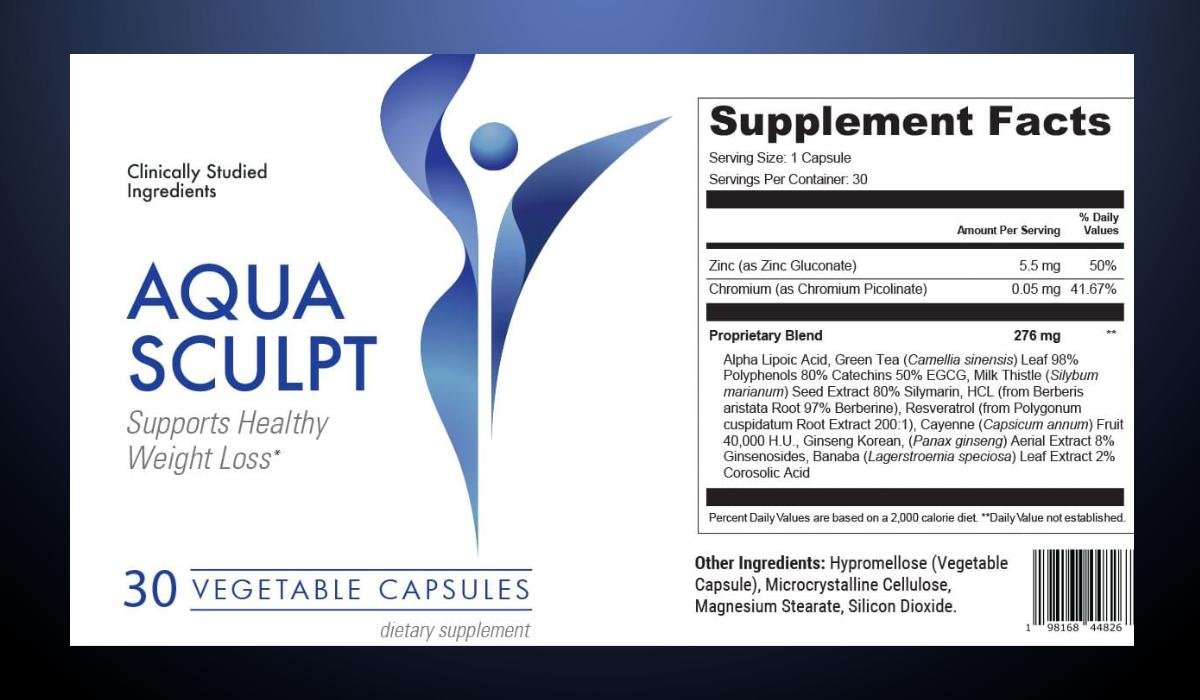
The supplied panel lists a serving size of one capsule and 30 servings per container. Two nutrients are quantified individually: zinc at 5.5 mg and chromium at 0.05 mg, or 50 mcg. Beneath those minerals, the label lists a 276 mg proprietary blend.
The proprietary blend contains alpha lipoic acid, green tea leaf, milk thistle seed extract, berberine HCl, resveratrol, cayenne fruit, Korean ginseng and banaba leaf extract. The ingredients are listed in descending order by weight within the blend, but that still does not reveal the exact amount of any single component.
This matters because ingredient studies often use specific doses. If a study used 500 mg of an ingredient, we cannot assume AquaSculpt supplies that amount just because the ingredient name appears on the label.
Zinc: 5.5 mg Per Serving
Zinc is an essential mineral involved in many enzymes, DNA synthesis, immune function, protein synthesis and normal cellular processes. The AquaSculpt label lists 5.5 mg of zinc as zinc gluconate, which it identifies as 50% of Daily Value.
Zinc is important to health, but it should not be described as a direct fat-loss agent. If a person is zinc deficient, correcting inadequate intake may support normal physiology. That is different from saying additional zinc automatically causes weight loss in someone who already receives enough.
The practical advantage of the AquaSculpt label is that the zinc amount is transparent. Buyers can add 5.5 mg to zinc from other supplements and fortified foods when estimating total supplemental intake.
Chromium Picolinate: 50 mcg Per Serving
Chromium is a trace mineral involved in normal carbohydrate, protein and fat metabolism. AquaSculpt provides 0.05 mg, which equals 50 micrograms, as chromium picolinate. Chromium supplements have been investigated for glucose metabolism and body composition, but effects on weight are generally modest or inconsistent rather than dramatic.
People taking diabetes medication should be cautious with any formula containing ingredients that may influence glucose handling. The issue is not that chromium is inherently unsafe at this dose, but that the total formula also contains berberine and banaba, which are often discussed in glucose-related contexts.
Inside the 276 mg AquaSculpt Proprietary Blend
A proprietary blend allows a manufacturer to list the total amount of a mixture without giving the quantity of each ingredient. This protects the formula from easy duplication, but it reduces dose transparency for consumers. In AquaSculpt, eight listed ingredients share 276 mg in total.
Alpha Lipoic Acid
Alpha lipoic acid is a sulfur-containing compound that functions as a cofactor in mitochondrial energy metabolism and can act in antioxidant systems. It has been researched in areas including diabetic neuropathy, oxidative stress and body-weight outcomes. Some meta-analyses report small average effects on weight, but those findings depend on study dose and duration. Because AquaSculpt does not disclose its individual alpha lipoic acid dose, the finished product cannot simply be assumed to reproduce trial results.
Green Tea Leaf Extract
The label specifies green tea leaf with 98% polyphenols, 80% catechins and 50% EGCG. Green tea catechins and caffeine have been studied for thermogenesis and energy expenditure. Results in weight-loss trials are mixed and usually modest. Extract concentration also matters: a standardized extract is not equivalent to a cup of brewed tea, and safety considerations can differ at high extract doses.
Milk Thistle Seed Extract
Milk thistle is listed as an 80% silymarin extract. It is best known in supplements marketed for liver support and antioxidant activity. Research on milk thistle does not establish it as a direct weight-loss ingredient. Its inclusion may reflect a broader wellness or metabolic-support rationale rather than a single primary mechanism.
Berberine HCl
Berberine is a plant alkaloid with a significant body of metabolic research, including studies of glucose and lipid markers. It can also affect drug-metabolizing enzymes and transporters. People taking prescription medication should not assume that a multi-ingredient berberine-containing product is automatically compatible with their regimen.
Another important limitation is dose. Berberine trials often use clearly defined amounts divided across the day. AquaSculpt does not state how much berberine is present within its 276 mg blend, so direct dose comparison is not possible.
Resveratrol
Resveratrol is a polyphenol found in foods such as grapes and peanuts and is widely studied for antioxidant and cardiometabolic topics. Human studies have produced mixed results depending on population and dose. Resveratrol's presence in AquaSculpt is not evidence that the product has a clinically proven anti-obesity effect.
Cayenne
Cayenne contains capsaicinoids, which contribute pungency and have been studied for thermogenesis and appetite. The label notes 40,000 heat units, which is a pungency standard, not a milligram dose. Capsaicin-related effects observed in research are generally modest and should not be framed as dramatic fat melting.
Korean Ginseng
Panax ginseng is standardized on the label to 8% ginsenosides. It has been studied for fatigue, glucose metabolism, cognition and other areas. Ginseng can interact with some medications and may affect sleep or stimulation in sensitive people. The exact amount in AquaSculpt is not disclosed.
Banaba Leaf Extract
Banaba is standardized to 2% corosolic acid. It is commonly included in glucose-support supplements and has been studied for effects on glucose handling. Because AquaSculpt also contains chromium and berberine, people using glucose-lowering medication should discuss the combined formula with a clinician.
Like the Formula? Check Today’s Package Options
See the seller’s current AquaSculpt pricing, shipping, bonus-book availability and 60-day guarantee terms.
Check Current AquaSculpt OfferOther Ingredients
The label lists hypromellose as the vegetable capsule material, along with microcrystalline cellulose, magnesium stearate and silicon dioxide. These are commonly used excipients that help form, fill or manufacture capsules. They are not the primary active ingredients.
Safety, Interactions and Who Should Be Cautious
Multi-ingredient supplements require more interaction awareness than a simple vitamin. Berberine, ginseng, green tea extract and other botanicals may be unsuitable for some people or may interact with medication. Pregnancy, breastfeeding, surgery, liver disease, kidney disease, diabetes treatment and anticoagulant therapy are examples of situations where professional guidance is sensible.
Do not increase the serving beyond the label in an attempt to accelerate results. Because the blend contains several ingredients with biological activity, doubling the capsules doubles exposure to all of them at once.
What the Ingredient List Can and Cannot Tell You
The ingredient list tells us the identity of the listed compounds, the amounts of zinc and chromium, the total proprietary blend amount and some extract standardizations. It cannot tell us the individual dose of each blend component, whether the finished formula has been tested in a randomized clinical trial, or what result a particular individual will experience.
That is why our overall assessment is balanced: AquaSculpt contains recognizable ingredients and useful standardization details, but proprietary blending limits dose transparency. Anyone comparing the product with scientific studies should keep that limitation in mind.
How Proprietary Blends Affect Evidence Comparison
A proprietary blend is not automatically a sign of poor quality, but it creates a practical evidence problem. Human trials report doses because dose affects both benefit and risk. When several ingredients share one combined number, a reviewer cannot determine whether the formula provides a small amount of each ingredient or is weighted heavily toward the ingredients listed first.
Under US supplement labeling rules, ingredients within a proprietary blend are generally listed in descending order by weight. That means alpha lipoic acid appears before green tea and the remaining blend ingredients, but it does not tell us its exact milligram amount. Even if one ingredient makes up most of the blend, the label alone does not reveal how much.
This is particularly relevant when reading online reviews that quote research doses. If an article says that berberine was studied at a particular amount and then implies AquaSculpt provides that amount, the inference is not supported by the supplied label. The same caution applies to green tea catechins, alpha lipoic acid, resveratrol, ginseng and banaba.
What “Clinically Studied Ingredients” Does and Does Not Mean
The phrase “clinically studied ingredients” can be accurate in a broad sense when ingredients in a formula have appeared in human research. It does not necessarily mean the exact branded product, finished formula, serving size or ingredient combination underwent a randomized controlled trial.
For consumers, the most useful questions are: Was the finished product tested? Were the same doses used? Was the study population similar to the intended customer? Was there a placebo group? How long did the trial last? Were outcomes objective, and was the research independently published? Those details determine how much confidence a claim deserves.
Ingredient Order on the AquaSculpt Label
The proprietary blend lists alpha lipoic acid first, followed by green tea, milk thistle, berberine, resveratrol, cayenne, Korean ginseng and banaba. Because ingredients in a proprietary blend are listed in descending order by weight, the order gives limited relative information. It still cannot be converted into exact milligrams.
This prevents a common mistake: dividing the 276 mg blend evenly among eight ingredients. Manufacturers are not required to use equal amounts, so 34.5 mg each would be an invented figure rather than a label fact.
Why Standardized Extracts Matter
Several AquaSculpt botanicals include standardization information. Standardization tells a buyer that an extract is manufactured to contain a specified percentage of certain compounds. Green tea is described with polyphenol, catechin and EGCG percentages; milk thistle with silymarin; ginseng with ginsenosides; and banaba with corosolic acid.
Standardization can make extracts more consistent than unstandardized plant powder. However, a percentage still needs an ingredient quantity to determine the actual amount of the standardized compound. If the label does not state how many milligrams of green tea extract are present, a 50% EGCG statement cannot tell us how many milligrams of EGCG the capsule supplies.
Could the Ingredients Overlap in Their Effects?
Multi-ingredient formulas are often designed around overlapping themes. In AquaSculpt, chromium, berberine and banaba are all discussed in glucose-metabolism contexts. Green tea and cayenne are commonly discussed around thermogenesis. Alpha lipoic acid, resveratrol and green tea are associated with antioxidant activity. Overlap may be intentional, but it also means interaction and total exposure deserve attention.
For people taking medication, overlap can be more important than any single ingredient. Combining several compounds that influence glucose handling, for example, may be relevant even when each individual amount is modest. This is one reason medication review should be based on the complete formula rather than one ingredient at a time.
Ingredient Quality Cannot Be Confirmed From a Web Image Alone
A label image can verify the declared ingredients and amounts, but it cannot independently confirm purity, contaminant testing, identity testing or manufacturing quality. Claims such as GMP manufacturing, third-party testing or non-GMO status should be supported by current seller or manufacturer documentation rather than inferred from the bottle design.
If quality verification is important to you, look for lot-specific testing, a certificate of analysis, identifiable manufacturing standards or direct seller support. An attractive label is not a substitute for those records.
Ingredient Research and Real-World Expectations
Even when an ingredient has statistically significant results in a study, the average effect may be small. Statistical significance does not automatically mean a large, visible or guaranteed effect for every user. Weight management is particularly variable because participants differ in baseline weight, diet, activity, medication use and metabolic health.
For that reason, the most accurate summary of the AquaSculpt formula is that it combines nutrients and botanicals with research histories relevant to metabolism and wellness, while the proprietary blend prevents precise dose comparison. That is useful information without overstating what the label can prove.
Questions to Ask Before Using a Multi-Ingredient Supplement
- Do I take any prescription or over-the-counter medication that could interact with the formula?
- Am I already using another supplement with chromium, zinc, green tea, ginseng or berberine?
- Do I have diabetes, liver disease, kidney disease, blood-pressure concerns or a bleeding disorder?
- Am I pregnant, nursing or preparing for surgery?
- Does the current bottle label match the online marketing page?
- Can I identify the seller’s current refund procedure before ordering?
- Am I comfortable with the fact that individual proprietary-blend doses are not disclosed?
How to Compare AquaSculpt With Other Supplements
When comparing AquaSculpt with another weight-management supplement, start with the label rather than the number of ingredients. A formula with fewer ingredients but full dose disclosure can be easier to evaluate than a formula with many ingredients inside a proprietary blend. Look at serving size, total daily capsules, stimulant content, disclosed mineral amounts, botanical standardization and whether the individual doses can be compared with research.
Also check overlap with products you already use. A multivitamin may already provide zinc and chromium, while a pre-workout or fat-loss product may contain green tea, caffeine or cayenne. Combining products can unintentionally increase exposure to the same compounds. The safest comparison is based on the complete daily intake, not one bottle in isolation.
Price comparisons should be made on a per-day basis only after confirming the serving size. AquaSculpt currently uses one capsule per day, which makes the math straightforward. Still, a lower cost per day does not automatically mean better value if the formula is poorly tolerated or does not fit your goals.
Why the Current 30-Capsule Label Matters
During preparation of this site, a visually different AquaSculpt image showing a blue cap and 60 capsules was also encountered. Because that image conflicts with the 30-capsule white-cap label supplied for this review, we do not mix the two presentations. Ingredient analysis on this site applies to the 30-capsule formula shown in our Supplement Facts image.
If you receive a bottle with a materially different capsule count or ingredient panel, verify it with the seller before assuming the information on this page applies. Product names can sometimes be reused across different marketplace listings, and image search results can combine unrelated or older versions.